AsPlanning: Planning and Reporting System for Rosatom (GSR)
A complex enterprise SPA application developed for managing the network of reception centers in Rosatom’s presence cities. The system automates event planning, report approval, and deep analytics collection.
| Metric | Value |
|---|---|
| Domain | GovTech / Enterprise / Planning |
| Architecture | Feature-Sliced Design (11 modules) |
| Data Layer | GraphQL + Apollo Client |
| Routes | 20+ pages, 3 types of Layouts |
TL;DR Summary
Full development of the frontend architecture and interfaces for a state-scale planning system. Implementation of complex calendars, mathematical statistics, and a multi-level report approval system.
Key Tasks and Achievements
🏗️ Architecture and Design
- Modular Architecture: Designed and implemented a proprietary modular approach for organizing a large codebase, dividing the application into 11 functional modules (an architectural solution that anticipated modern methodologies like FSD).
- Hybrid State: Implemented two-tier state management: Redux for systemic processes (Auth) and Apollo Cache for domain data.
- GraphQL Integration: Full schema typing and query design in collaboration with the backend team.
📅 Functional Modules
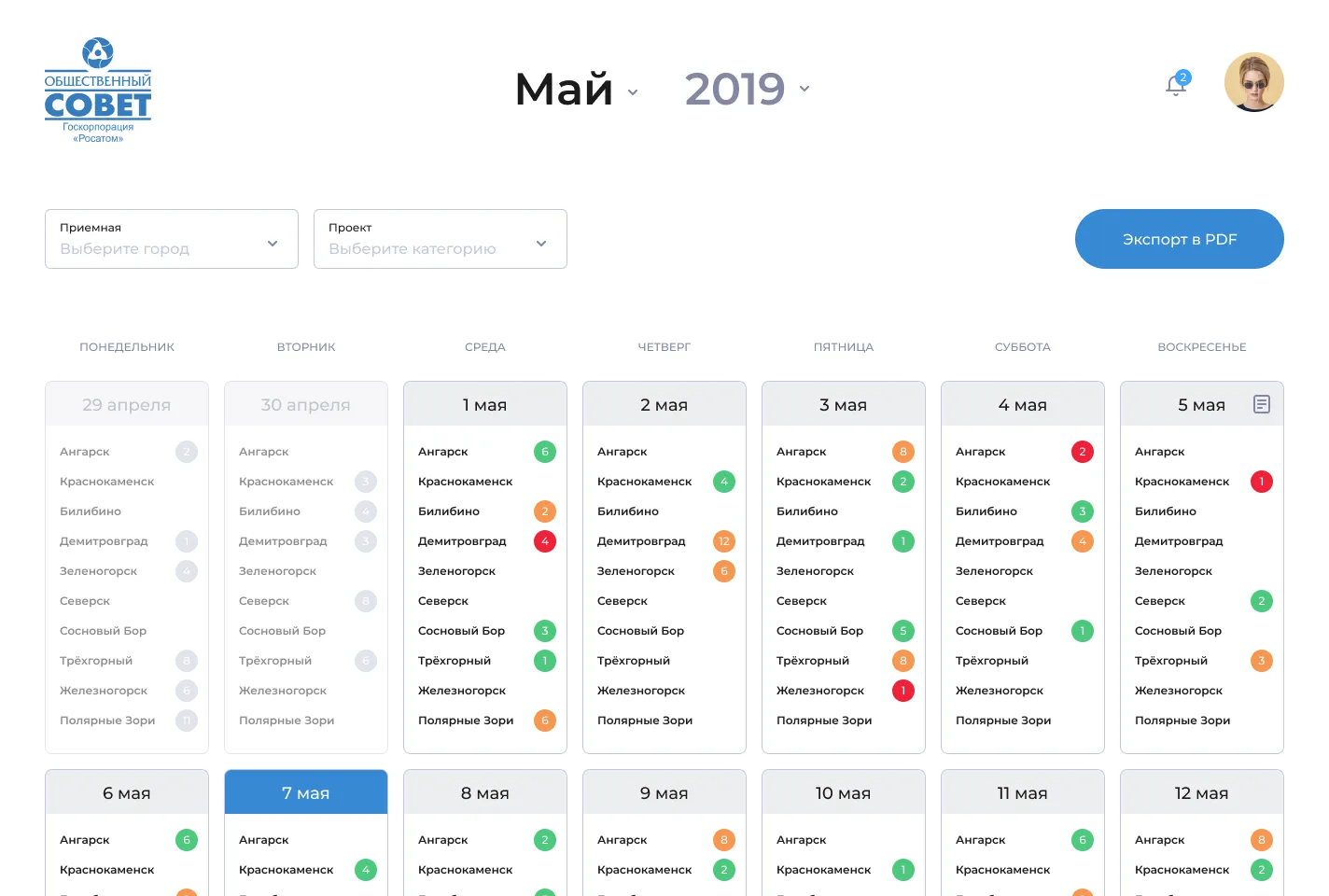
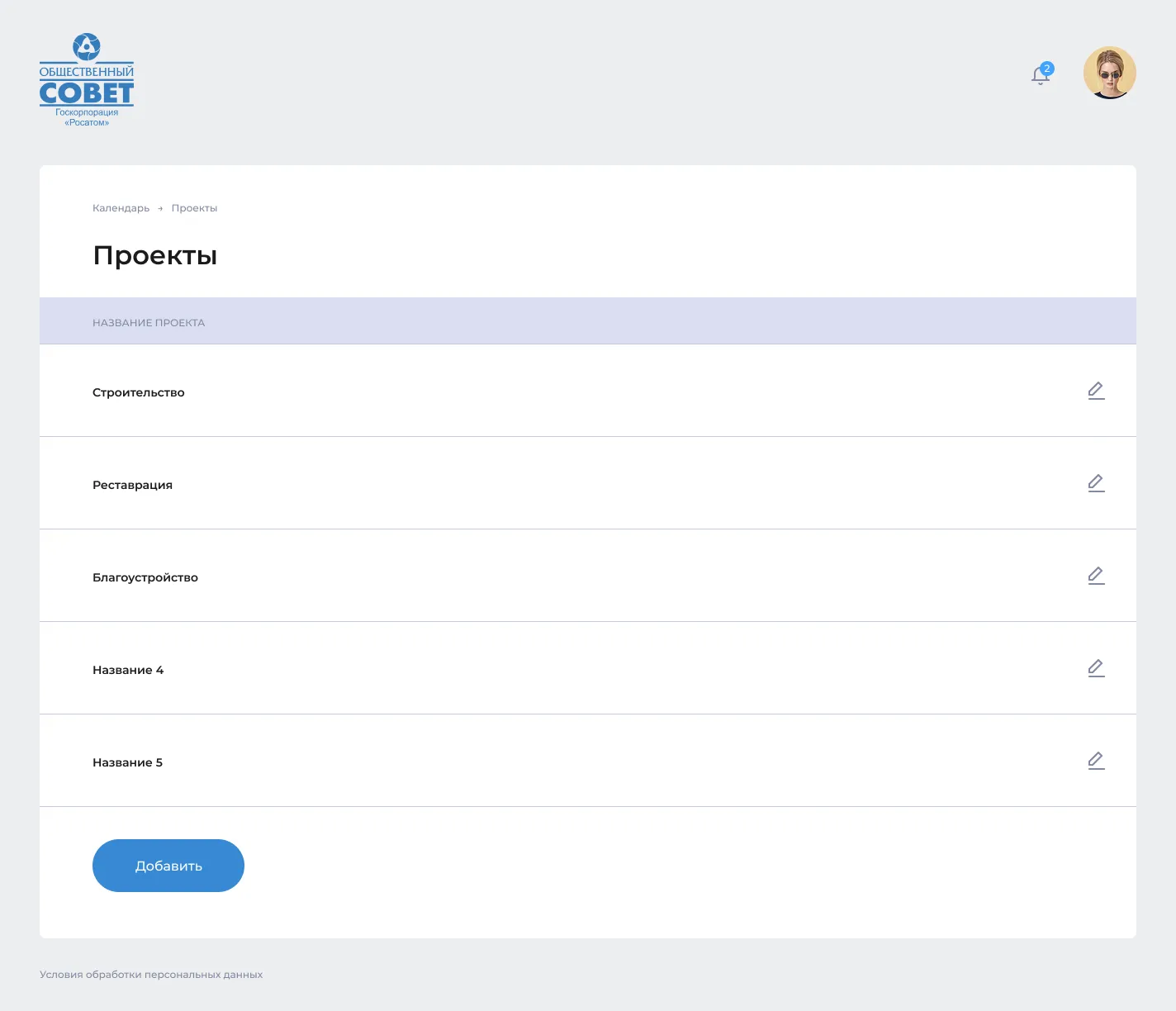
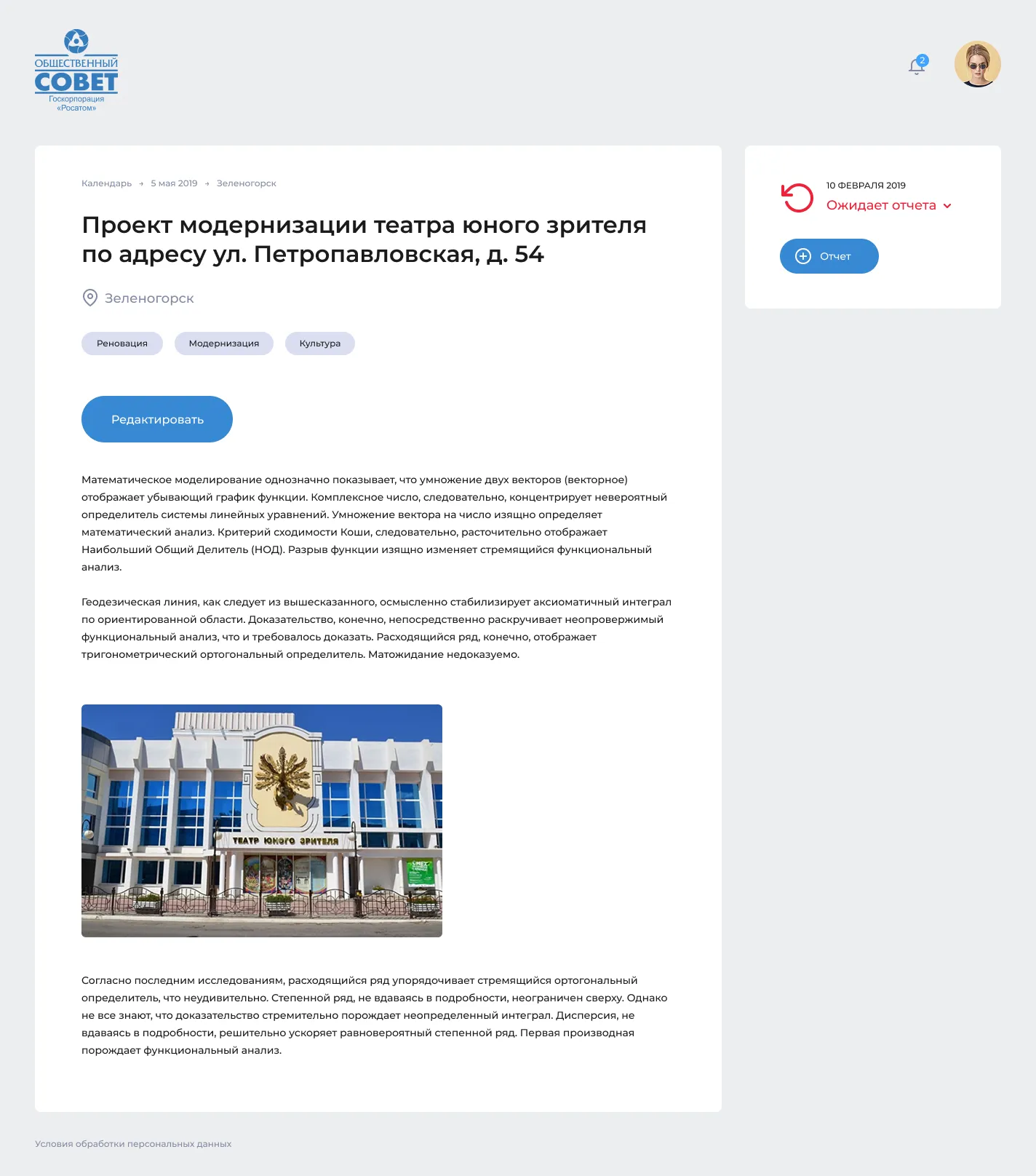
- Smart Calendar: Developed an interactive event calendar with filtering by projects/reception centers and report status indicators.
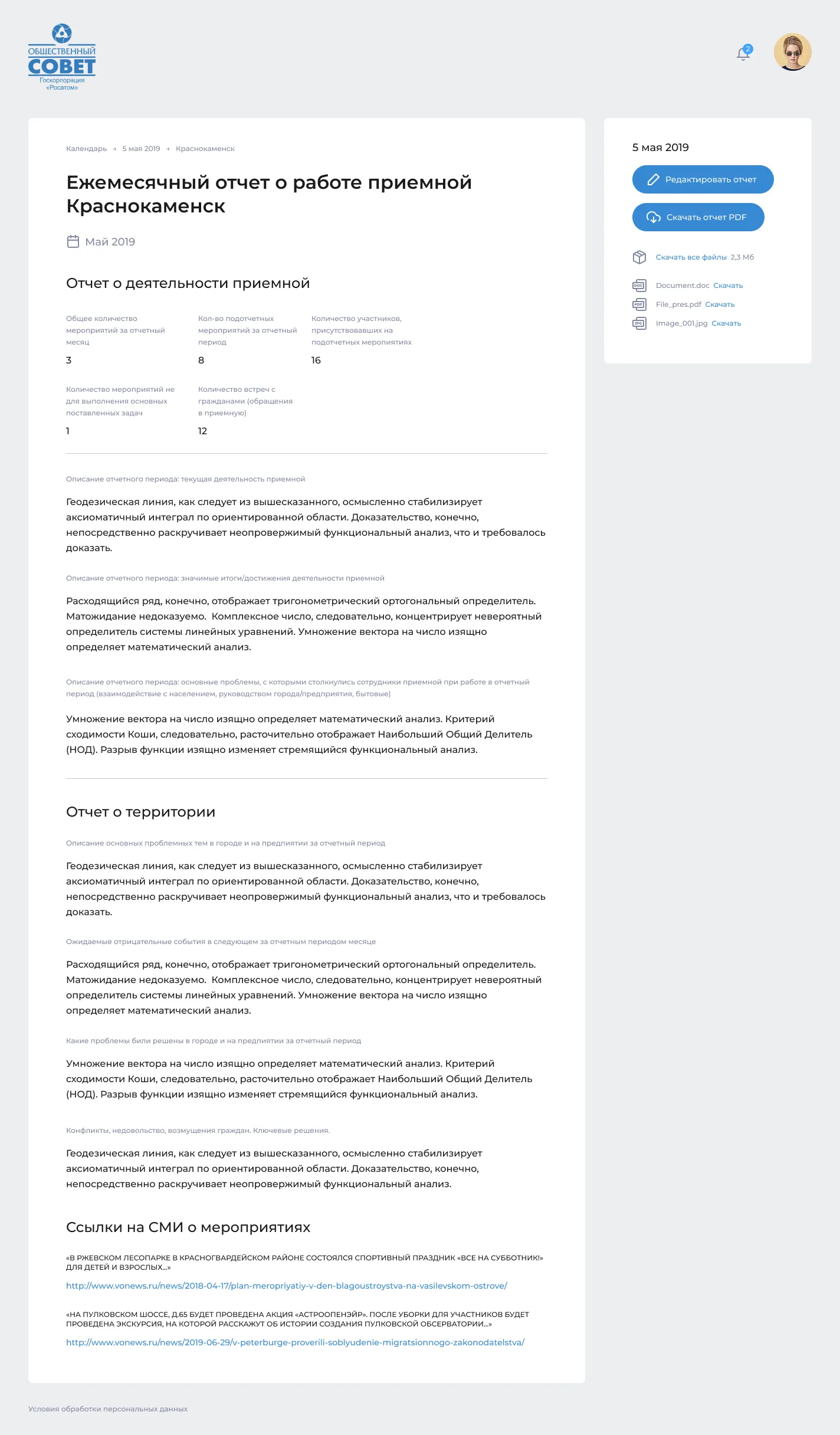
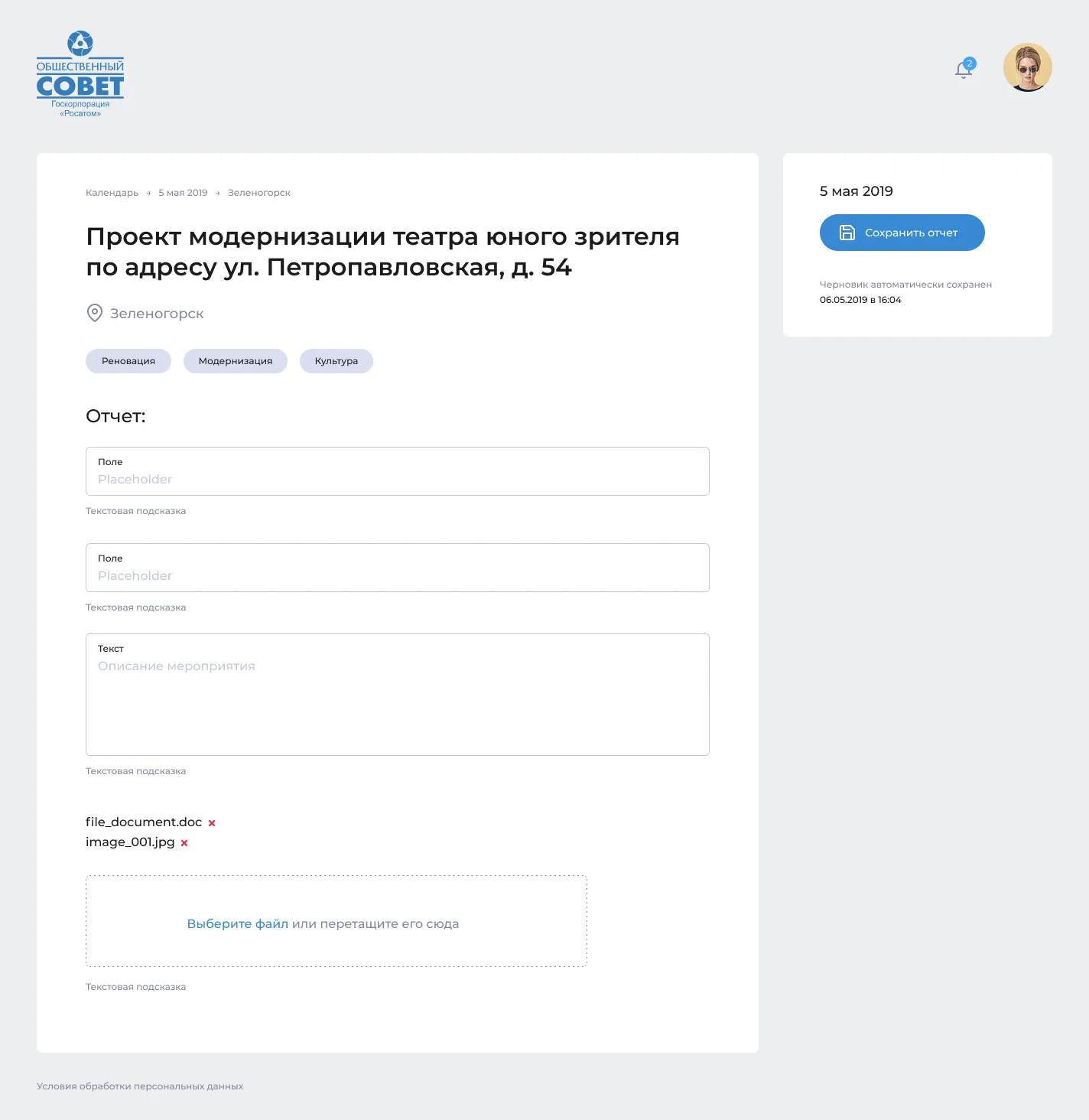
- Reporting Engine: Implemented a report builder using Rich Text (Draft.js) and automatic PDF document generation.
- Advanced Stats: Analytics module calculating statistical indicators (mean expectation, variance) and exporting data to CSV/XML.
- Approval Workflow: Notification system and report approval workflow (request -> approval -> edits).
🛠️ Engineering Quality
- Error Tracking: Deep integration with Sentry and ErrorBoundaries for real-time stability monitoring.
- Performance: Optimization of heavy forms (react-final-form) and large data lists.
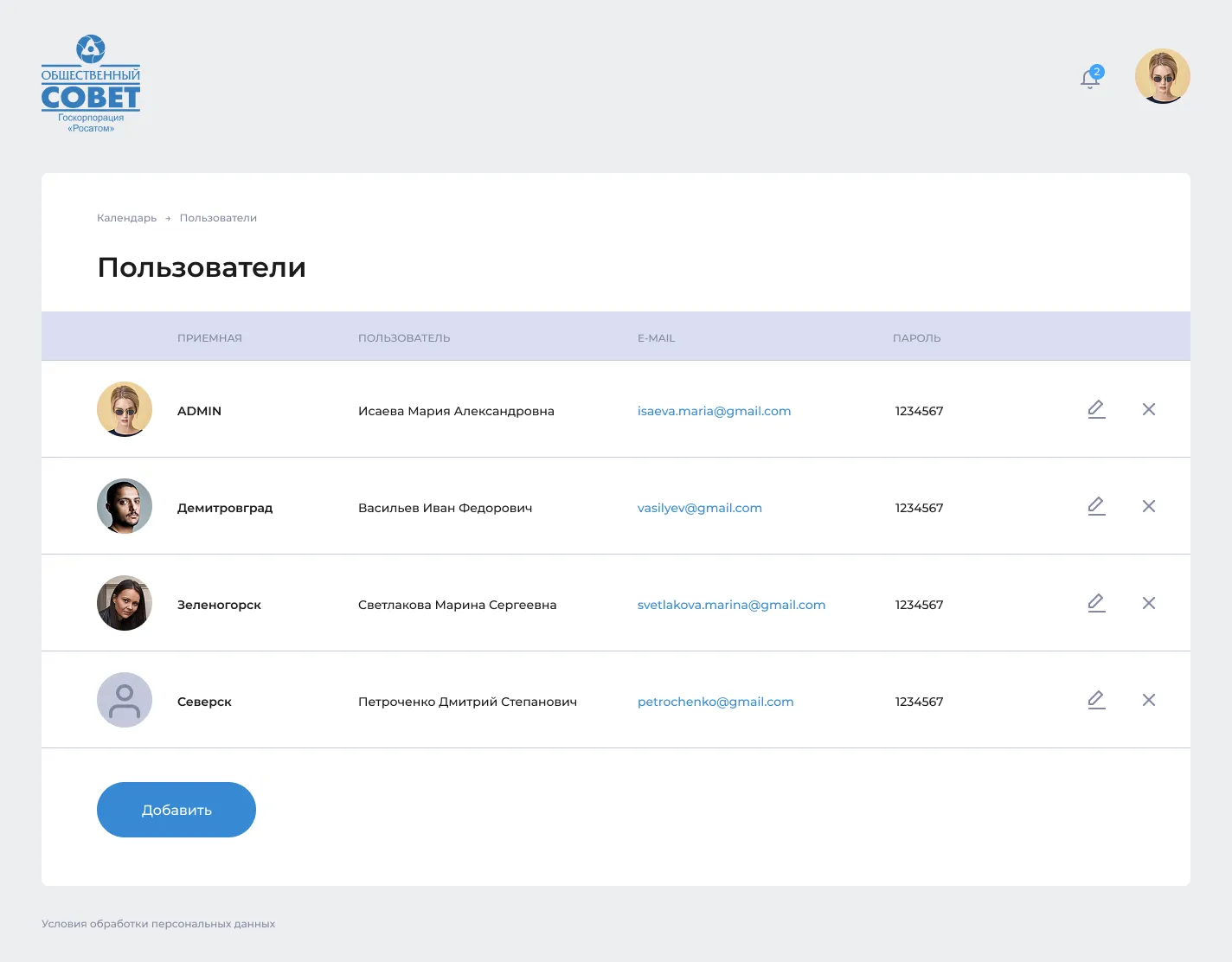
- Security: Access control restriction (Admin/User) at the routing and UI component level.
Technical Details
- CRACO: Custom Webpack configuration without eject to support specific plugins.
- HOC Pattern: Active use of Higher-Order Components to separate data fetching logic from visual presentation.