OKAN: Collaborative Technical Documentation Platform
OKAN is a specialized B2B system for the construction industry, replacing the chaos of Word files with a unified environment for collaborative editing, approval, and versioning of project documentation.
| Metric | Value |
|---|---|
| Domain | ConTech / Collaborative Editor |
| Architecture | Custom Isomorphic SSR (Express + Apollo) |
| Complexity | Tree-structured content |
| Integrations | Froala WYSIWYG, RBAC system |
Quick Summary (TL;DR)
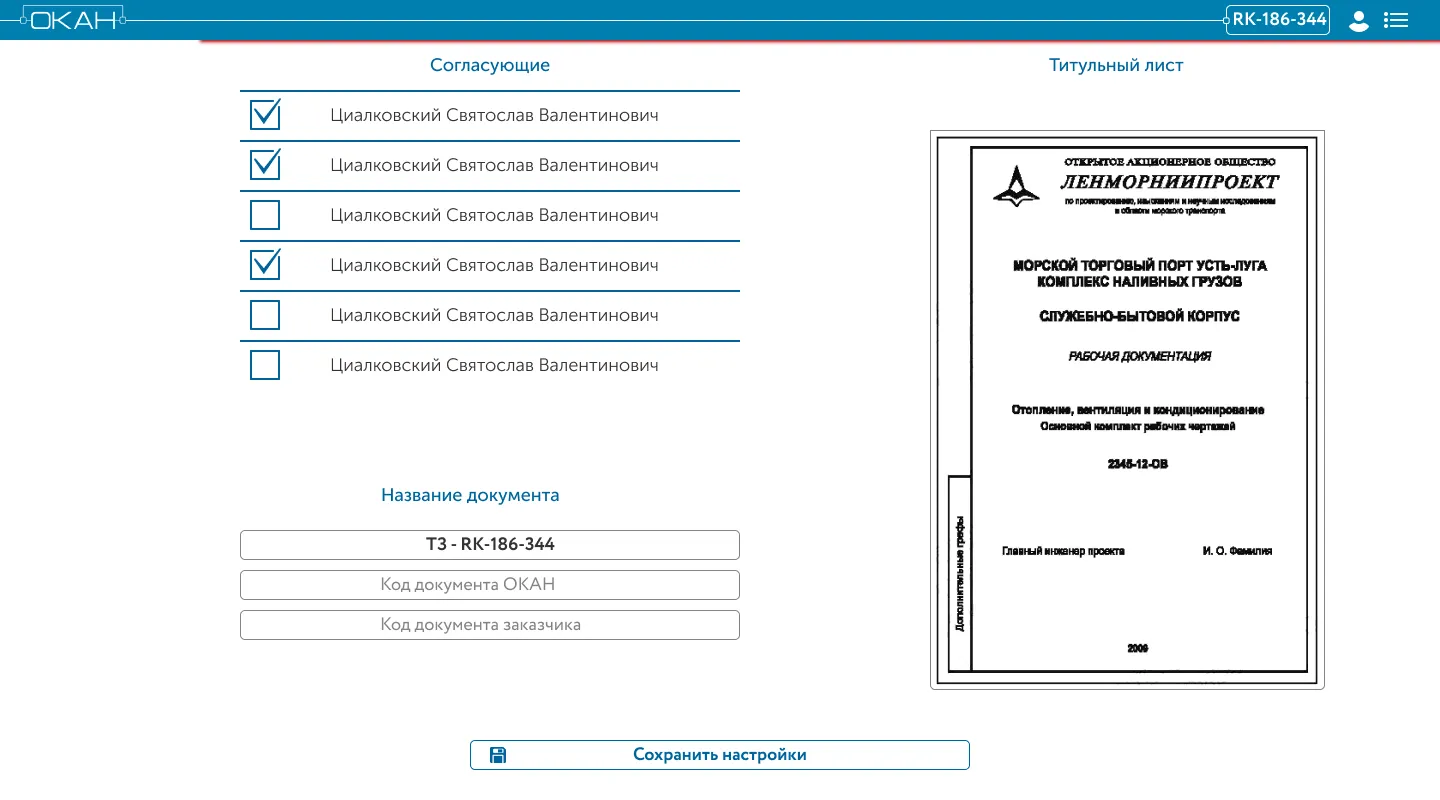
Designing and developing a complex document editor with a hierarchical “cell” structure, optimistic updates, and a custom SSR engine. Implementation of an Approval Workflow system and granular access control.
Key Engineering Challenges
🌲 Document as a Data Tree
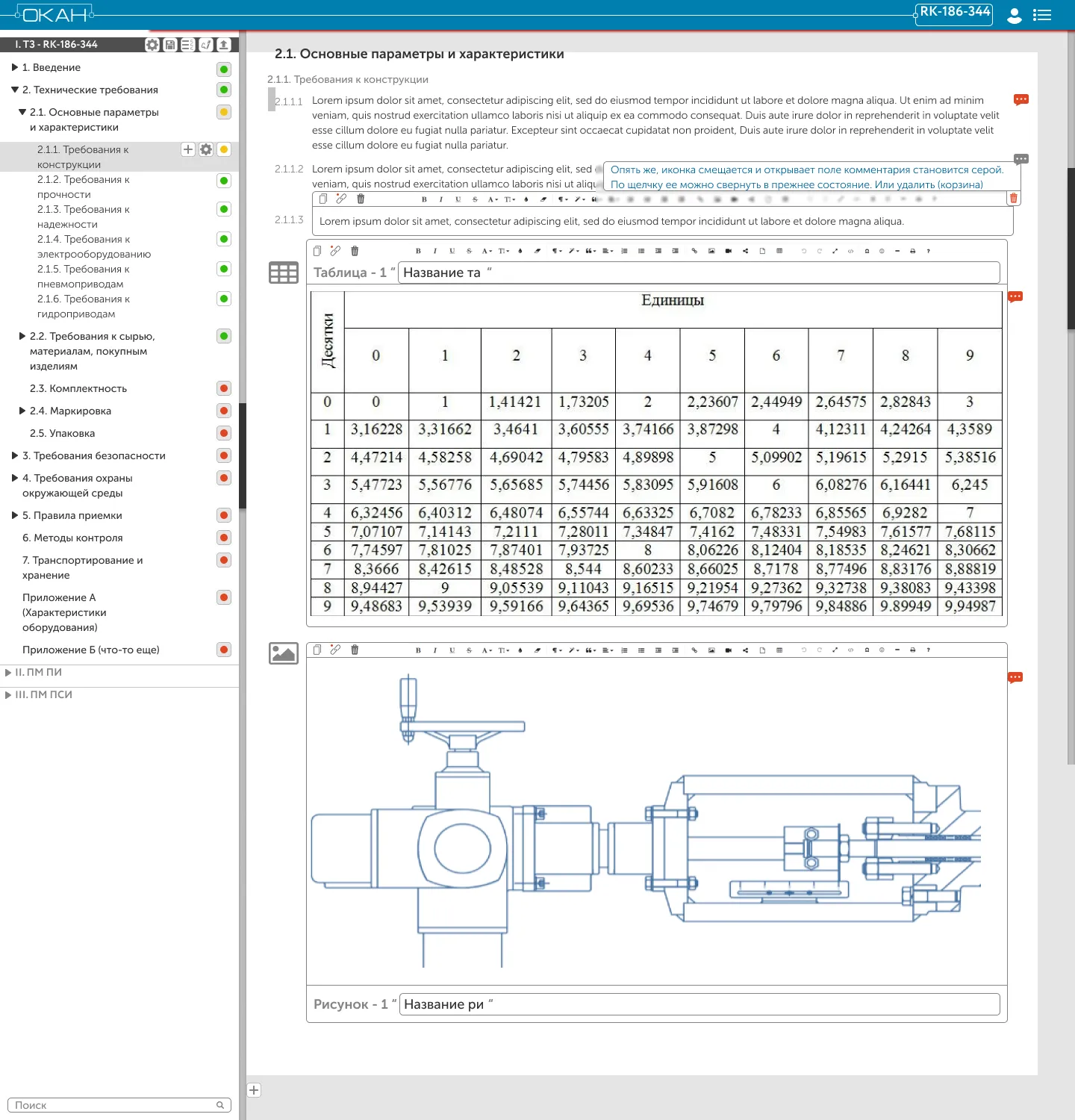
Instead of monolithic text, the document is represented as a tree of typed cells (text, tables, images).
- Custom Tree: Implemented complex navigation and rendering based on
react-treebeard(custom logic spanning 1200+ lines). - Drag-to-Bind: Developed a “live binding” mechanism for cells using Drag-and-Drop on the pure DOM API to create cross-document reference dependencies.
🏗️ Architectural Decisions
- Three-Tier State: Effective combination of Redux (global state), Apollo Cache (domain data with optimistic updates), and React Context (editor modes and search).
- Deep SSR: Setting up isomorphic rendering with hydration of three independent state snapshots (Apollo, Redux, Async Components).
- Design Tokens: Using Rebass and styled-system to create a scalable and themeable UI library.
📝 Professional Editor
- Auto-save: Guaranteed data saving system (30s interval + save-on-blur with debounce).
- RBAC: Implemented 4 editor modes (Full Access, Commenting, Read-Only, Revision) with strict permission separation at the routing and UI level.
Technical Details
- Modularity: Applying FSD-like structure with automatic route generation from functional modules.
- Tooling: Integrating Froala Editor with Redux Form to ensure seamless data input.